


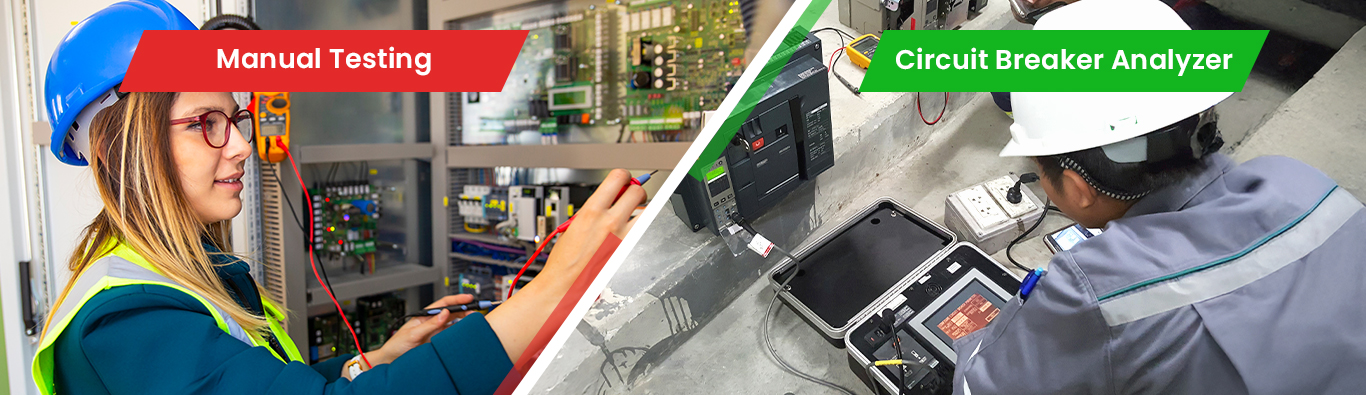

Circuit Breaker Analyzer vs. Manual Testing: Pros and Cons
In the sphere of electrical engineering, and especially when considering circuit breaker performance evaluation, the decision to use a circuit breaker analyzer versus a manual circuit breaker inspection technique is critical. This decision impacts not only the efficiency of maintenance but also the reliability and longevity of electrical systems.
Automated circuit breaker testing tools, such as the circuit breaker analyzer, have added great value to the industry’s progress because they offer faster, more accurate, and less flawed evaluations of circuit breakers. In contrast, manual circuit breaker inspection techniques provide an element of physical interaction that may reveal details that machine observations may overlook.
In this blog post, we explore the benefits of automated breaker testing alongside the challenges in manual circuit breaker testing to help you understand which method suits your needs best.
Manual Circuit Breaker Inspection Techniques
Manual circuit breaker inspection techniques rely on human expertise and basic tools to evaluate breaker functionality. This has been used throughout the years, but like all methods, it comes with its advantages and disadvantages.
Pros of Manual Testing
Cost-effective for Small-Scale Testing: The price of tools is very low, making it suitable for small-scale operations or residential systems.
- Human Insights: Automated devices, no matter how advanced cannot pick up some fine detail which knowledgeable technicians can.
- Adaptable: It caters to all types and designs of circuit breakers and does not require advanced tools.
Cons of Manual Testing
- Labor Intensive: A lot of time is spent in preparation, actual testing, and evaluation of the test results.
- Dependability: Results depend heavily on the skill and experience of the technician, leading to potential inconsistencies.
- Limited Data: Lack of information regarding timing and contact resistance can lead to unhelpful results.
- Inaccuracy: Manual procedures are always subjected to some level of accuracy problems, in particular, if the technique and equipment being used are complicated.
Circuit Breaker Analyzer: The Modern Solution
The circuit breaker analyzer is an automated system used for in-depth evaluation of the performance of a circuit breaker. This sophisticated device automatically checks the opening and closing times, contact dynamic resistance, and other parameters, thus yielding precise information on the condition of the breaker.
Benefits of Automated Breaker Testing
- Precise and Consistent Results: The use of automated circuit breaker testing tools removes the chances of human errors and gives results that are dependable and consistent.
- Time-Saving: Testing is done faster, as analyzers are capable of conducting several tests at the same time.
- Monitoring Data: Advanced analyzers make it possible to efficiently prepare reports on needed parameters which can prevent possible failures.
- Increased Security: With automation, human intervention is lessened and the likelihood of accidents is decreased.
- Reduction in Operational Cost: Although there is a large capital expenditure at the beginning, the efficiency and precise nature of the automated circuit breaker testing tools will lower operational costs.
Disadvantages of a Circuit Breaker Analyzer
- Expensive Equipment: The equipment may be pricey making it unsuitable for small scale application.
- Dependency on Technology: Skilled technicians are required to operate and interpret results from the analyzer.
- Calibration is Required: To produce reliable results, analyzers have to be calibrated frequently, which can be costly.
Choosing the Right Approach
Choosing a circuit breaker analyzer or manual circuit breaker inspection techniques depends on the nature of your operations. Automated circuit breaker testing tools might be too much for small-scale facilities because of the additional expenses they incur. Industries, however, that require maximum efficiency and safety should invest in circuit breaker analyzer for circuit breaker testing.
What makes Crest Test Systems a better choice?
Crest Test Systems is a trusted partner when it comes to the performance evaluation and testing of circuit breakers. Our expertise in circuit breaker performance evaluation ensures precise results tailored to industry standards. Crest Test Systems uses innovative technology, which integrates improved measures of safety and efficiency in the workplace, with advanced tools that make the testing process easier.
Final Thoughts
Manual testing is indeed beneficial in some situations, but the circuit breaker analyzer is most reliable in terms of efficiency, accuracy, and understanding of the importance of modern industries. By partnering with experts like Crest Test Systems, you can ensure your electrical systems remain safe, efficient, and reliable.
Contact Crest Test Systems today to explore our range of products and find the ideal solution for your circuit breaker testing needs.
FAQs:
Manual testing involves physical inspection and operation, while an analyzer automates and standardizes the process.
Advantages include precision, consistency, and speed, offered by tools like those from Crest Test Systems.
Manual testing can be reliable but is prone to human error and variability.
Analyzers have a higher initial cost but save on labour and time in the long term.