High Voltage Tester
High Voltage Tester
Home + Blog + High Voltage Testers for Industrial Automation

High Voltage Testers for Industrial Automation

In factories and plants, electricity is not just another utility; it is the lifeblood of the entire system. If something goes wrong with the power side, machines stop, production stops, and at worst, people get hurt. That is why testing electrical equipment under extreme conditions is not optional; it is mandatory.
High voltage testers fulfill this role. They do not simply test to see if a machine is operational. They subject the equipment to stress far beyond what the equipment will see on a daily basis to ensure the insulation, wires, components, etc., will not fail when the pressure is on.

What High Voltage Testing Actually Means

So, what happens during high voltage testing? It’s not about flipping a switch and seeing if the lights turn on. Instead, a controlled but much higher-than-normal voltage is applied to equipment cables, motors, switchgear, even entire systems.
The point is to uncover problems you wouldn’t notice under normal conditions, such as:
  • Weak insulation that might fail over time.
  • Hidden defects that cause dielectric breakdown.
  • Leakage currents that drain efficiency.
  • Stress points that only show up when voltage spikes.
Think of it like a stress test for athletes: you don’t find the weak knee by asking someone to walk, you find it when they sprint uphill.

Why It Matters in Automation

Automation depends on harmony. Being able to keep machines, control units, and supply systems in sync. If one component fails (think: a cable with bad insulation), it could take down the entire line.
That’s the value of high voltage testers. They:
  • Protect people from electric shock and fires.
  • Keep you operating within IEC, IEEE, and ASTM standards.
  • Detect faults before they become expensive failures.
  • Maintain production uptime by avoiding unexpected downtime.
What could be better? Confidence. Teams know their systems are ready to run without second-guessing.

The Main Types of High Voltage Testers

Different problems call for different tools. Here are the main categories:

Tester

Best Suited For

AC High Voltage Tester

Transformers, switchgear, and high-voltage cables

DC High Voltage Tester

Capacitors, long cables, and electronic assemblies

Impulse Tester

Simulating lightning strikes and switching surges

Hipot Tester

Checking insulation in motors, wires, and PCBs

Automated HV Systems

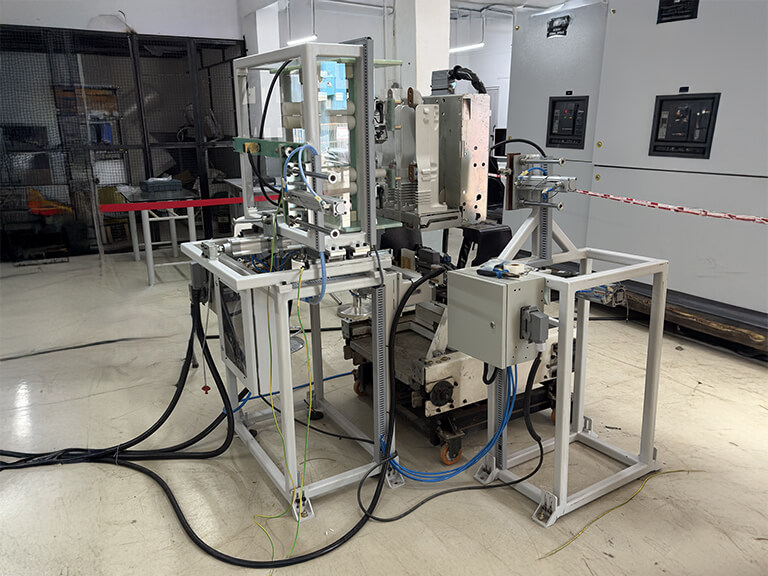
Production lines that need fast, repeatable checks

For example, a hipot tester is common on factory floors, while impulse testers are more specialized, used in utilities or aerospace, where equipment must survive extreme conditions.

Where They’re Used

High voltage testing isn’t confined to one sector. It’s everywhere electricity is critical:
  • Electronics – Validating semiconductors and circuit boards
  • Automotive – Especially EV batteries and charging systems
  • Utilities – Transformers, transmission lines, and distribution networks
  • Aerospace & Defence – Ensuring mission-critical systems don’t fail mid-flight
  • Heavy Industry & Robotics – Protecting insulation in demanding environments
Different industries, same principle: don’t take electrical reliability for granted.

Picking the Right Tester

Choosing the right high voltage tester isn’t something you do on autopilot. A few key points help narrow the options:

What to Look At

Why It Counts

Voltage Range

The tester should comfortably cover the highest voltage you’ll ever need to apply.

Type of Test

Whether it’s AC, DC, or impulse makes a big difference depending on the equipment being checked.

Automation Fit

If you’re running high-volume production, the tester should connect smoothly with automated setups.

Compliance

Must meet international safety and performance standards to avoid issues later.

Portability

Decides if the tester can be carried to the field or kept as a fixed lab unit.

A utility company will prioritize AC testers for transformers, while EV manufacturers lean toward DC and hipot devices. High-volume plants increasingly go for automated testers because they eliminate repetition and human error.

Wrapping It Up

Industrial automation doesn’t forgive weak links. High voltage testers are important as they ensure safety, compliance, and long-term reliability.
From small hipot devices to fully automated HV systems, the role is the same: expose weaknesses before they cause chaos. Companies that invest in the right testers aren’t just ticking boxes for compliance, they’re protecting uptime, people, and reputation.
Ready To Take Testing To The Next Level?
At Crest Test Systems, we have helped industries push boundaries with our advanced testing solutions. From high voltage to entire automated test systems, we create custom solutions that offer you peace of mind with accuracy and compliance.
Contact us today to see how Crest can provide strength to your automation line.

FAQs:

It’s a device that tests equipment with high voltages to verify insulation and electrical strength.
They keep systems safe, reduce downtime, and ensure compliance with international rules.
AC, DC, impulse, hipot, and automated systems.
Electronics, automotive, aerospace, power utilities, and heavy manufacturing.
Yes. Modern testers often link directly with production lines for faster, repeatable checks.
Scroll to Top