


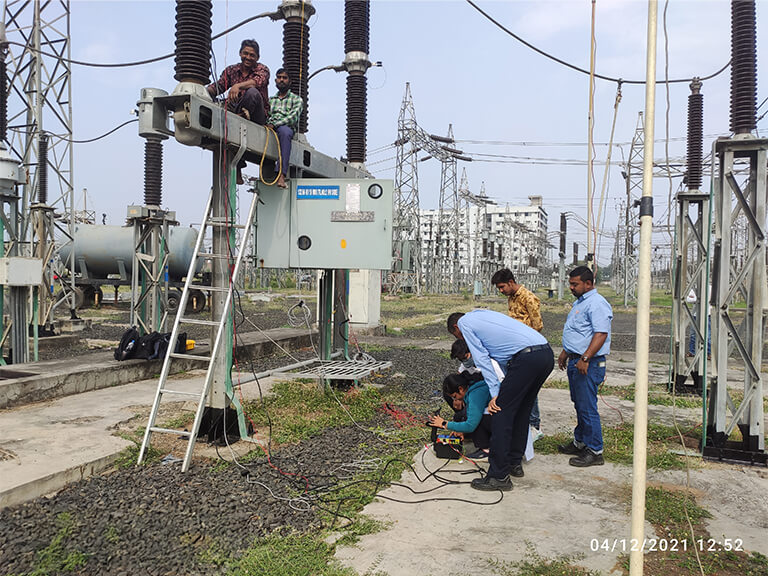
Top Mistakes to Avoid When Conducting Contact Resistance Tests
In electrical maintenance, it’s often the little things that cause the biggest trouble. A loose bolt here, a bit of oxidation there, and suddenly a breaker fails under load. That’s why contact resistance testing is so important. It tells you whether the conductive joints inside breakers, busbars, and switchgear are actually doing their job.
A contact resistance tester injects high current and measures how much resistance shows up across a connection. If the number’s higher than it should be, it’s a warning sign: the contact might heat up, arc, or break down under stress. Simple enough in theory, but here’s the catch: if the test isn’t done right, the results can mislead you.
Below are the mistakes people make most often, and how to avoid them.
1. Not Preparing the Equipment
One of the easiest traps to fall into is skipping the basics. Dust, corrosion, or even a slightly loose joint can ruin your reading. If the connection isn’t cleaned and tightened before testing, you may end up chasing “bad” numbers that aren’t real faults. Always prep the breaker first.
2. Using Too Low a Test Current
This is a big one. Contact resistance tests need a serious current, 100 A or more in many cases. Some techs try to cut corners with a lower setting, but the problem is that small currents won’t reveal things like micro-pitting or oxidized surfaces. If you want the truth, push enough current through the contact.
3. Forgetting About Temperature
Resistance shifts with temperature. If you test a breaker right after it’s been operating, the warmth can mask problems by lowering the resistance value. Cold environments push the reading the other way. The safest approach is to let the equipment cool and stabilize before you start logging numbers.
4. Trusting a Single Reading
Contacts aren’t always consistent, especially if they’re dirty or worn. Taking one reading and calling it “good” is a mistake. Run the test at least a couple of times. If your results bounce around, that’s not noise; it’s telling you something about the condition of the contact.
5. Skipping Calibration of the Tester
Even the best instruments drift. A contact resistance tester that hasn’t been checked or calibrated recently can give you false precision: numbers that look perfect but aren’t accurate. If your team relies on test data to make decisions, then keeping instruments calibrated should be non-negotiable.
6. Not Recording the Results
A test without records is just a snapshot. What really matters is the trend. A breaker might pass today, but if resistance has been creeping upward over the last year, you’ve got an early warning of trouble. Too often, results get scribbled on paper or are not stored at all, making it impossible to spot the bigger picture later.
Conclusion
A contact resistance test sounds straightforward, but the value lies in the details. Rushing setup, using weak current, or skipping calibration can all undermine the process. With the right approach and a reliable contact resistance tester, you get data you can trust and equipment you can rely on.
Ready to Take Testing Seriously?
At Crest Test Systems, we’ve spent decades building testing solutions that help industries avoid the kind of failures they can’t afford. Crest has systems from contact resistance testers to fully automated diagnostic systems. They are designed for high accuracy, repeatability, and compliance.
Contact us today and see how our testing expertise can make your maintenance programs smarter, safer, and more effective.
FAQs:
It measures the resistance across conductive joints to confirm the contacts aren’t going to overheat or fail under load.
Not prepping equipment, applying too little current, disregarding temperature, and neglecting calibration.
Clean and tighten all contacts, apply the correct current, stabilize the temperature, and confirm that your tester has been calibrated.
A contact resistance tester that is designed to push high current and measure very low resistance.
During the performance of scheduled maintenance cycles, and usually on an annual or equipment duty cycle basis.