

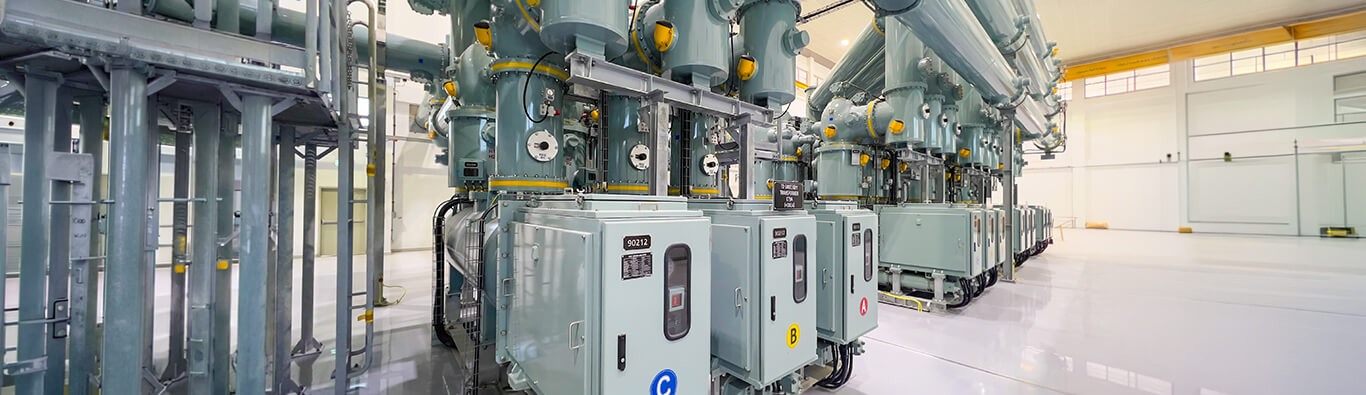
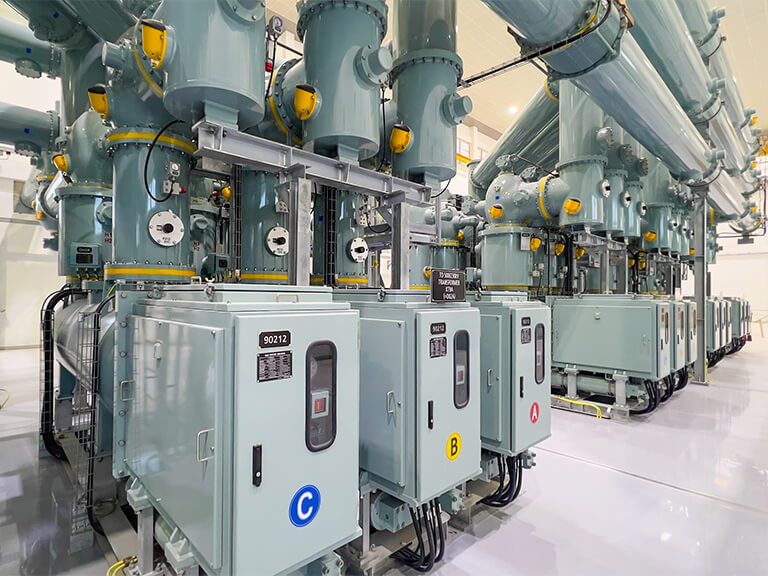
Electrical Testing Challenges in GIS Substations
Gas Insulated Switchgear (GIS) Substations are widely used in power systems because they are compact, enclosed, and well-suited to high-voltage applications where space and reliability are critical. Unlike substations that use air for insulation, GIS systems use gas inside closed compartments, which makes the system more controlled but also more sensitive to internal defects, gas quality, and mechanical performance.
This is why testing GIS Substations is very important during commissioning, installation, and maintenance. The GIS substation may look stable from the outside, but its actual performance depends on what is happening inside enclosed chambers, circuit breakers, disconnectors, earthing switches, busbars, and control circuits.
For utilities, manufacturers, and industrial facilities, proper Electrical Testing of GIS substations helps detect problems early and reduces the risk of failure. This keeps the system reliable for a time.
Crest Test Systems provides testing solutions for circuit breakers, disconnectors, and earthing switches with product offerings designed for on-field and OEM testing requirements, including preventive maintenance, troubleshooting, and commissioning support.
Why GIS Substation Testing Is Important
A GIS substation is often installed in areas where spaces are limited such as cities, industrial zones, power plants and important infrastructure projects. Since the system is compact and enclosed, any problem inside the system can be difficult to detect without the Electrical Testing process.
Testing helps verify:
- Electrical insulation strength
- Circuit breaker performance
- Contact resistance & current path condition
- Gas pressure and insulation quality
- Mechanical movement of switching devices
- Readiness before energisation
In GIS applications, testing is not some compliance activity. It is a practical method to know if the equipment can work safely under demanding conditions.
Technical references on GIS testing note that key test categories can include dielectric tests, short-circuit tests, mechanical tests, temperature-rise checks, resistance measurement, gas pressure tests, and circuit breaker performance checks.
Key Electrical Testing Challenges in GIS Substations
1. Limited Access to Internal Components
One of the challenges in testing Gas Insulated Switchgear Substation Testing is that it has limited access. Since GIS equipment is closed, technicians cannot easily inspect the conductors, contacts or insulation areas.
This makes testing highly dependent on instruments and proper test methods. A small problem inside the enclosure may not be visible from the outside, yet it can still affect system performance.
For example, poor contact alignment, increased resistance or mechanical delay in switching operations can go unnoticed without proper circuit breaker testing and diagnostic measurement.
This is where suitable GIS Testing Equipment becomes critical. The test setup must capture readings without depending on visual inspection alone.
2. Gas Insulation Quality Must Be Maintained
GIS systems depend on gas insulation for their design and reliable electrical performance. If the gas quality is affected by moisture, leakage, contamination or pressure variation, the insulation strength is reduced.
This creates a challenge during GIS maintenance testing because gas-related issues may develop slowly over time.
Common concerns include:
- Gas leakage
- Moisture content
- Reduced insulation strength
- Contamination due to internal arcing or ageing
- Pressure variation inside compartments
If these issues are not detected early, they can increase the risk of insulation failure. This is why GIS testing should include checks related to insulation condition and system integrity.
3. High Voltage Testing Requires Precision
GIS substations operate in high-voltage environments, which means electrical testing must be handled with accuracy and safety. Dielectric testing, impulse testing and withstand voltage checks require controlled procedures and rated equipment.
The challenge is that GIS systems have tight clearances. Even a small insulation weakness can become serious under high-voltage stress.
High voltage tests are used to confirm whether the insulation system can withstand operating voltage, temporary overvoltage and transient conditions. These tests require planning, trained personnel and equipment that can deliver stable test output.
Crest’s product range includes high-voltage testing solutions and circuit breaker testing systems for switchyard applications, including circuit breaker test systems designed for testing circuit breakers up to 800 kV.
4. Circuit Breaker Performance Is Critical
Circuit breakers inside GIS substations must operate within defined timing limits. Any delay, mismatch or mechanical issue can affect protection performance during a fault.
Electrical Testing of a GIS circuit breaker usually involves checking:
- Opening time
- Closing time
- Contact timing
- Coil current
- Travel and speed
- Contact resistance
- Dynamic contact resistance
Circuit breaker faults aren’t always visible. While a breaker might still open and close, its timing could be off. This issue can, over time, seriously affect the reliability of the whole protection system.
Crest’s circuit breaker testing systems include features such as contact resistance measurement and transducers with custom-engineered fixtures, which support detailed analysis of breaker performance.
5. Contact Resistance Can Increase Over Time
Contact resistance measurement is a part of GIS maintenance testing. If resistance increases, it can lead to heating, energy loss, and possible equipment damage.
In GIS substations, this becomes more challenging because the current carrying parts are enclosed. Technicians need test instruments to identify resistance changes before they become serious.
Contact resistance issues may happen due to:
- Ageing of contacts
- Mechanical wear
- Loose joints
- Contamination
- Alignment
- Previous fault stress
A reliable resistance measurement process helps the maintenance teams to understand whether the current path is healthy and safe for running operations.
6. Mechanical Movement Must Be Verified
GIS equipment includes moving parts such as circuit breakers, disconnectors and earthing switches. These components must move correctly during operation.
Mechanical testing is important because even small movement errors can affect switching performance. For example, slow operation, poor travel response or incomplete contact movement can create risk. Testing travel, speed, timing, and motion patterns helps identify mechanical issues before they lead to failure.
7. Testing During Commissioning Is Time-Sensitive
GIS commissioning is normally carried out under tight project schedules. The substation shall be tested, verified and energised as per the planned schedule. This puts stress on testing teams. They need to do a lot of checking without losing accuracy.
Commissioning tests may include:
- Insulation resistance checks
- Voltage tests
- Contact resistance measurement
- Circuit breaker timing
- Interlock verification
- Control circuit checks
- Gas pressure and leakage checks
- Protection system verification
The challenge is to complete all required tests with documentation. Any missed reading or incomplete test record can create issues during handover or future maintenance.
8. Accurate Data Recording Is Necessary
In GIS substations test data is valuable for long-term maintenance. Every reading taken during commissioning becomes a reference point for comparison.
If the data is incomplete, inconsistent or manually recorded without structure, it becomes difficult to track changes over time.
Good Electrical Testing should include test reports with values, conditions, timestamps and observations. This helps maintenance teams compare performance with earlier records.
For example, if contact resistance slowly increases over maintenance cycles, the trend may indicate developing contact wear. Without data, this pattern may be missed.
The Role of GIS Testing Equipment
The GIS Testing Equipment makes testing more accurate, safer and easier to document.
Effective equipment should support:
- High-voltage testing requirements
- Circuit breaker timing analysis
- Contact resistance measurement
- Dynamic contact resistance measurement
- Travel and speed measurement
- On-field testing conditions
- Reliable data capture
- Repeatable test procedures
Testing equipment should also be practical for field teams. As GIS substations are often located in demanding environments, portability, ruggedness and ease of use matter.
Crest Test Systems has developed circuit breaker test systems for challenging switchyard conditions and provides after-sales support that includes installation, commissioning and troubleshooting assistance.
Best Practices for GIS Maintenance Testing
To improve the reliability of GIS substations, testing should be planned as a maintenance activity rather than a one-time requirement.
Here are a few practical best practices:
Maintain a Testing Schedule
Routine testing helps identify changes in equipment performance. The interval may depend on voltage level, operating conditions, fault history and manufacturer recommendations.
Compare Test Results Over Time
One test result gives a snapshot. Multiple results show a trend. Trend-based analysis helps detect deterioration.
Use Properly Rated Equipment
GIS testing involves voltage and high-current systems. The equipment must be suitable for the application and voltage class.
Document Every Test Properly
Good documentation supports maintenance, audits, troubleshooting and asset planning.
Train Testing Teams
GIS systems are compact and sensitive. Proper handling, safe procedures and correct interpretation of readings are essential.
How Crest Test Systems Supports Electrical Testing
Crest Test Systems specialises in test and measurement solutions for circuit breakers, induction motors, and traction motors. The company supports on-field and OEM testing requirements with solutions used for maintenance, troubleshooting and commissioning.
For GIS substations, reliable circuit breaker testing and electrical diagnostics are important because switching performance directly affects system safety. Crest’s circuit breaker testing systems support field testing requirements.
Crest helps industries and utilities improve testing accuracy, reduce downtime risk, and maintain asset reliability. GIS substations are designed for reliable and high-voltage power distribution. Because their key components are enclosed, testing becomes more complex.
Conclusion
Proper GIS Substation Testing helps detect defects, verify insulation strength, check circuit breaker performance, measure contact resistance and support safe energisation. From commissioning to maintenance, Electrical Testing of GIS plays a direct role in long-term reliability.
The main challenge is not only performing the test, but performing it accurately, safely, and consistently. With the GIS Testing Equipment and a good plan for testing, companies, like utilities and industries, can lower the chance of something going wrong, make maintenance easier to plan and keep important power systems running smoothly with confidence.
FAQs:
A GIS substation is a compact high-voltage substation where electrical components are enclosed in gas-insulated compartments for safe and space-efficient operation.
Electrical testing helps verify insulation strength, switching performance, gas condition, and overall reliability before faults develop.
Common challenges include limited internal access, gas quality monitoring, high-voltage safety, contact resistance checks, and accurate fault detection.
Common GIS tests include insulation resistance, high-voltage withstand, contact resistance, circuit breaker timing, gas leakage, and partial discharge testing.
Partial discharge can weaken insulation over time and may lead to internal faults if not detected early.
SF6 gas monitoring is important because gas pressure, purity, and moisture levels directly affect insulation performance and operational safety.
GIS commissioning tests require precise equipment, strict safety procedures, accurate documentation, and coordination within tight project timelines.
Condition monitoring helps track equipment health, detect early warning signs, and plan maintenance before failures occur.
Partial discharge testing helps identify insulation defects inside sealed GIS compartments before they become major failures.
GIS substations should be tested during commissioning and at planned maintenance intervals based on equipment condition, usage, and manufacturer recommendations.