

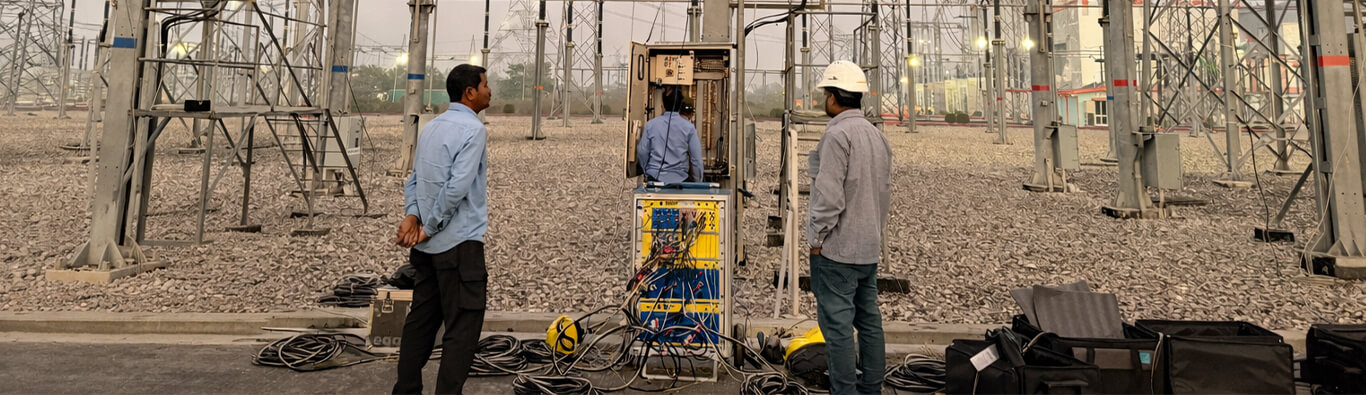
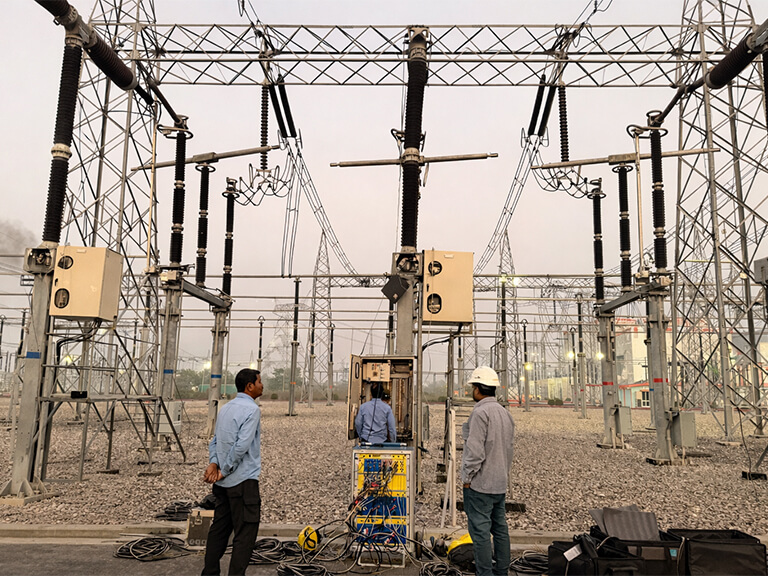
How Circuit Breaker Test Equipment Improves Grid Reliability
If you spend enough time around substations, you start to notice something: the most important equipment is usually the quietest.
Circuit breakers wait patiently. They are not meant to be flashy or loud, just reliable, because when a fault occurs, everything depends on them.
That’s why circuit breaker testing isn’t a procedural formality. It’s one of the most direct ways utilities and manufacturers protect overall grid performance. When done properly, it strengthens protection schemes, reduces unplanned outages, and supports long-term electrical grid reliability.
The Reality: Breakers Degrade Slowly
A circuit breaker doesn’t typically fail overnight.
- Contacts wear gradually.
- Lubricants lose effectiveness.
- Trip coils weaken.
- Mechanical linkages stiffen.
None of this is obvious from the outside. The breaker may still open and close during routine checks. But internally, operating margins can narrow over time.
That’s where circuit breaker test equipment becomes critical. It reveals what visual inspection cannot.
What Circuit Breaker Test Equipment Actually Evaluates
Modern circuit breaker analyzers and related instruments measure performance in detail, not just functionality.
Key parameters include:
- Opening and closing time.
- Pole synchronisation.
- Contact resistance.
- Coil current profiles.
- Mechanical travel and velocity.
- Insulation withstand capability.
Each of these connects directly to power grid reliability improvement. A breaker that opens even slightly slower than expected allows higher fault energy to flow through the system. That extra stress accumulates.
Circuit Breaker Timing Test: Why Speed and Synchronisation Matter
A circuit breaker timing test measures the interval between the control signal and actual contact movement. It also verifies whether all poles operate together.
If one pole lags behind the others, system protection coordination can shift. In high-voltage applications, that delay can increase mechanical and thermal stress on connected equipment.
Timing trends over multiple years are often more revealing than a single test result. Small deviations tell a story about internal wear.
Contact Resistance Testing: Catching Heat Before It Happens
Contacts carry current under load. If their resistance increases, even slightly, heat builds up. Contact resistance testing uses micro-ohm measurement to detect:
- Surface oxidation.
- Pitting.
- Misalignment.
- Pressure loss at contact interfaces.
By identifying resistance drift early, engineers prevent overheating events that can escalate into failures. It’s one of the simplest tests in breaker evaluation, and one of the most powerful.
Understanding Coil and Mechanism Behaviour
A breaker’s mechanical operation depends on its control circuit.
Modern circuit breaker analyzers capture coil current waveforms during trip and close operations. These waveforms give us information about:
- How well the actuator is working
- Mechanical friction caused by the actuator’s movement
- How the latch operates
- How stable is the control voltage
Without this information, any small problems with an actuator are sometimes not noticed until it fails.
From Scheduled Maintenance to Predictive Decisions
In the past, breakers were maintained at regular intervals, although not all breakers required service when they were opened. They were inspected based on their scheduled maintenance.
Today, many utilities rely on trending data gathered from circuit breaker testing solutions. Engineers compare timing values, resistance measurements, and movement profiles year after year.
If performance remains stable, unnecessary intervention is avoided. If drift appears, action is taken before failure occurs. That shift supports measurable power grid reliability improvement.
Testing and Industry Standards
Periodic breaker verification is required under standards issued by the International Electrotechnical Commission and adopted through national frameworks.
Routine Circuit Breaker Testing demonstrates:
- Operational readiness.
- Compliance with IEC 62271-series standards.
- Documented asset performance.
Testing protects more than equipment. It protects accountability.
Why Integrated Testing Platforms Make a Difference
When timing, resistance, insulation, and movement are tested separately, data correlation becomes difficult. Results may be accurate, but they lack context.
Integrated systems bring those parameters together.
Crest Test Systems supports manufacturers and utilities through its AutoScan Circuit Breaker Test Systems, which enables:
- Breaker timing analysis.
- Coil and motor current measurement.
- Mechanical movement tracking.
- Endurance and mechanical cycling.
Conducting these tests within one coordinated setup improves repeatability and reduces measurement variability. Structured evaluation directly strengthens overall grid confidence.
Conclusion
Grid reliability is built on protective equipment that performs correctly under pressure. Circuit breakers are at the center of that protection.
Circuit breaker testing provides measurable assurance that breakers will operate within design limits when faults occur. Through accurate timing evaluation, contact resistance testing, and actuator analysis, hidden weaknesses are identified before they escalate.
The modern circuit breaker analyzer and other types of circuit breaker test equipment make reliability observable or tracked rather than assumed.
For organizations looking to strengthen their breaker validation process, Crest Test Systems offers structured testing platforms that align with international standards and support long-term operational stability. Reliable grids are not accidental. They are verified.
FAQs:
It is specialized equipment used to measure timing, resistance, mechanical movement, and insulation performance of circuit breakers.
Because it ensures breakers can interrupt faults correctly, preventing equipment damage and large-scale outages.
By identifying timing delays, contact degradation, or actuator issues before failure occurs during a fault.
Timing tests, contact resistance testing, coil current measurement, dielectric testing, and endurance cycling.
Typically, every one to three years for critical breakers, depending on duty cycle and regulatory requirements.
Yes. Subtle changes in timing, resistance, or motion often reveal issues not visible during routine inspection.
Yes. IEC and related national standards require periodic verification of breaker performance.
Higher accuracy, improved repeatability, automated reporting, and long-term performance tracking.
By trending performance data over time, enabling condition-based maintenance instead of fixed-interval servicing.