


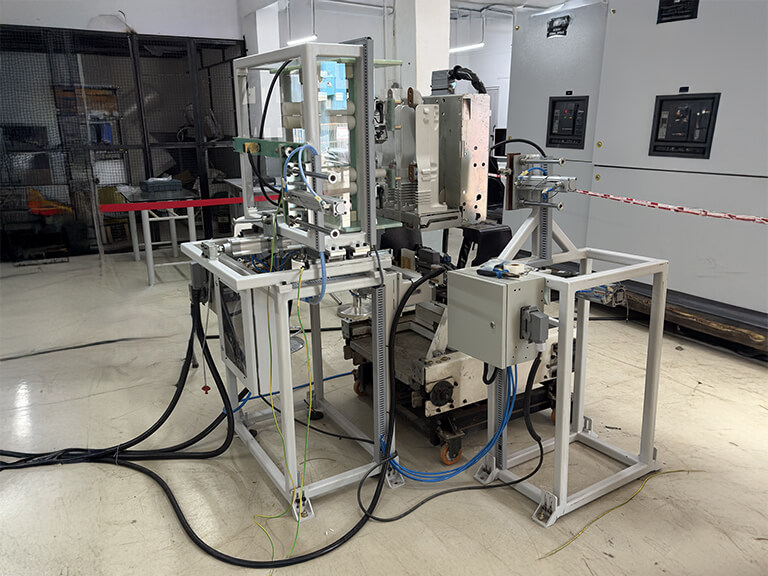
High Voltage Testers for Industrial Automation
What High Voltage Testing Actually Means
- Weak insulation that might fail over time.
- Hidden defects that cause dielectric breakdown.
- Leakage currents that drain efficiency.
- Stress points that only show up when voltage spikes.
Why It Matters in Automation
- Protect people from electric shock and fires.
- Keep you operating within IEC, IEEE, and ASTM standards.
- Detect faults before they become expensive failures.
- Maintain production uptime by avoiding unexpected downtime.
The Main Types of High Voltage Testers
Tester | Best Suited For |
AC High Voltage Tester | Transformers, switchgear, and high-voltage cables |
DC High Voltage Tester | Capacitors, long cables, and electronic assemblies |
Impulse Tester | Simulating lightning strikes and switching surges |
Hipot Tester | Checking insulation in motors, wires, and PCBs |
Automated HV Systems | Production lines that need fast, repeatable checks |
Where They’re Used
- Electronics – Validating semiconductors and circuit boards
- Automotive – Especially EV batteries and charging systems
- Utilities – Transformers, transmission lines, and distribution networks
- Aerospace & Defence – Ensuring mission-critical systems don’t fail mid-flight
- Heavy Industry & Robotics – Protecting insulation in demanding environments
Picking the Right Tester
What to Look At | Why It Counts |
Voltage Range | The tester should comfortably cover the highest voltage you’ll ever need to apply. |
Type of Test | Whether it’s AC, DC, or impulse makes a big difference depending on the equipment being checked. |
Automation Fit | If you’re running high-volume production, the tester should connect smoothly with automated setups. |
Compliance | Must meet international safety and performance standards to avoid issues later. |
Portability | Decides if the tester can be carried to the field or kept as a fixed lab unit. |