
Manual vs Automatic High Voltage Testers
Home + Blog + Manual vs Automatic High Voltage Testers: Pros and Cons

Manual vs Automatic High Voltage Testers: Pros and Cons

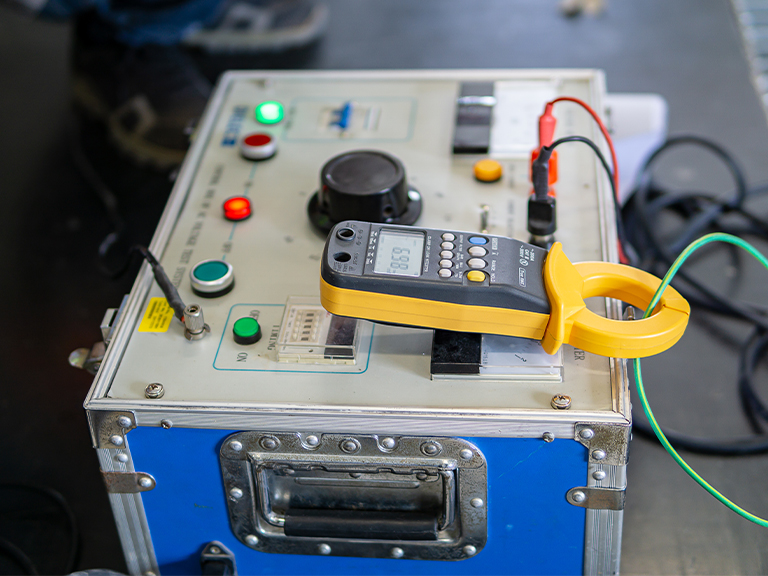
For the safety, reliability, and proper functioning of your electrical system, high voltage testing is not just a process step, it is a necessity. The only thing to consider is whether to use a manual high voltage tester or choose to use an automated high voltage tester.
Let’s get to know each category of testers so you can make a well-informed decision for your operations.

First, What Are High Voltage Testers?

High voltage testers are devices operating at voltages higher than the device’s normal operating voltage. The primary job of these testers is to test for insulation faults, insulation defects, or hidden weaknesses in electrical apparatus. These high-voltage tests are essential in every phase of electrical apparatus, from production to regular quality assurance testing.
There are two broad categories you will encounter as a user:
  • Manual High Voltage Testers – These rely on operator input for every process, including determining the test voltage and recording the test results.
  • Automatic High Voltage Testers – These handle the process for you, many with programmed sequences of testing, built-in safety interlocks, and software support for recording data, failures, and test conditions.
Both devices will perform the intended operation; however, the process they perform and the environment they are suitable for testing are vastly different!

Pros and Cons of Manual High Voltage Testers

Pros

Cons

Lower cost upfront

Requires experienced operators

Ideal for small batches or occasional tests

Higher risk of human error

More control for real-time troubleshooting

Can be slower and more repetitive

Easy to carry and set up on-site

Data logging is manual and can vary in quality

Pros and Cons of Automatic High Voltage Testers

Pros

Cons

Delivers consistent, repeatable results

The initial cost is higher

Speeds up testing cycles

It may not be necessary for low testing throughput

Built-in data capture and reporting features

Requires setup and operator training

Greatly reduces the chances of error

Less flexibility for non-standard procedures

A Quick Side-by-Side Comparison

Feature

Manual HV Tester

Automatic HV Tester

Operation

Fully manual

Automated (often with software support)

Accuracy

Depends on the operator’s skill

High accuracy, consistent every time

Data Recording

Manual and prone to inconsistency

Automated and easily traceable

Best For

Field use or low-volume testing

High-volume, repetitive test cycles

Cost

Lower upfront cost

Higher cost but quicker ROI

So… Which One Should You Go For?

Choose a manual tester if:
  • Load capacity: Usually between 100–200 amps.
  • Circuit count: 20–40.
  • Types of breakers: Mostly single- and double-pole breakers for appliances.
  • Design: simple layout, easy to reset, and typically a lighter enclosure.
Go for an automatic tester if:
  • You will be testing at high volumes.
  • You want consistent, repeatable accuracy.
  • You plan for the data captured while testing to be stored on a central server.
  • Minimizing errors and saving time is a priority for you.

Final Thoughts

Manual testers allow for a measure of flexibility and control, especially in the field. Automatic testers will typically offer speed, accuracy, and scalability in a controlled environment. Ultimately, the best choice is determined by your workflow and preferred priorities.
At Crest Test Systems, we offer both manual and automatic high voltage testers, built for accuracy, safety, and usability. Whether you’re testing occasionally or around the clock, we’ve got the right solution for your needs.
Looking to upgrade your high voltage testing? Let’s connect. Contact us to learn more about our entire high-voltage testing machine offerings.

FAQs:

Manual testers rely on the operator throughout the process. Automatic testers do the heavy lifting with minimal manual input.
Yes. They remove the human element from the process, which means fewer errors and more consistent results.
Absolutely if your testing needs are occasional or basic. Manual testers are reliable, portable, and cost-effective for the right scenarios.
If you’re testing daily, working with sensitive systems, or reporting data regularly, automatic testers are a smart long-term choice.
Scroll to Top