

7 Signs It’s Time to Upgrade Your Electrical Testing Equipment
Electrical testing equipment is essential for maintaining product quality, operational safety, and consistent performance. Whether you manufacture circuit breakers, manage switchyards, test induction motors, or work with traction systems, the reliability of your test results largely depends on the equipment you use.
However, testing needs keep changing. Manual processes, limited measuring capabilities, and disconnected instruments can slow down testing and increase the risk of inconsistent results.
Crest Test Systems supports OEM and on-field testing needs through modern test and measurement solutions for circuit breakers, induction motors, and traction motors. Their systems are designed to assist with preventive maintenance, troubleshooting, commissioning, and quality assurance.
Here are seven signs that your current electrical testing equipment may need an upgrade.
1. Your Testing Process Is Still Highly Manual
Manual testing often involves repeated wiring, separate measurements, handwritten notes, and more time spent preparing reports. As the number of products or test cycles increases, managing this process can become difficult.
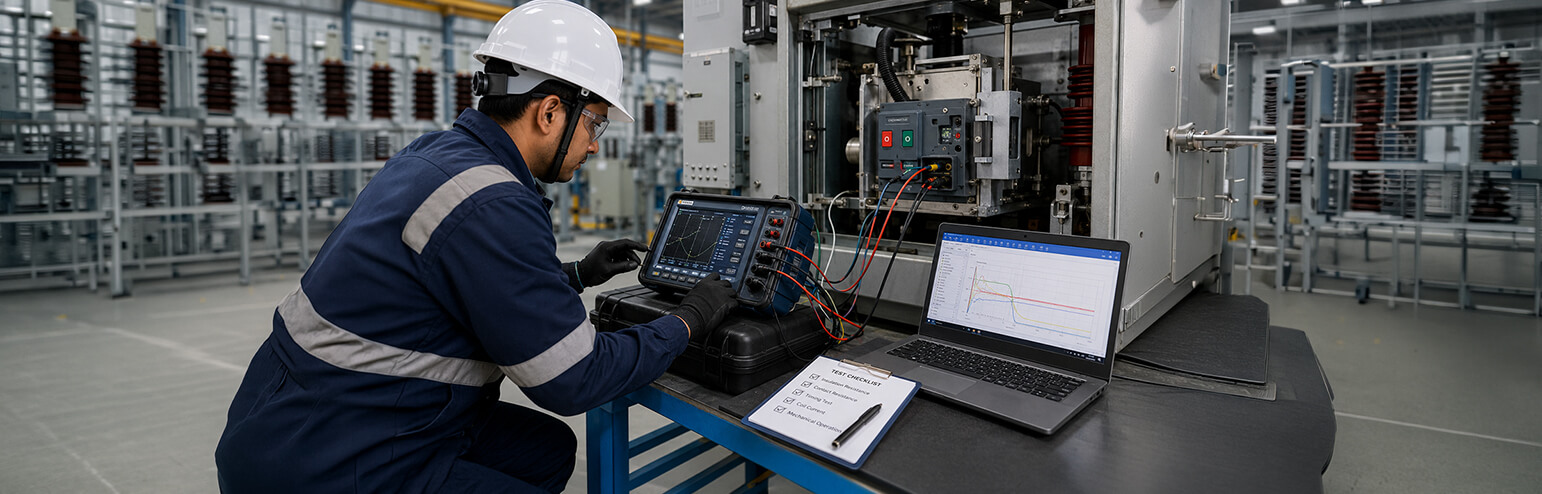
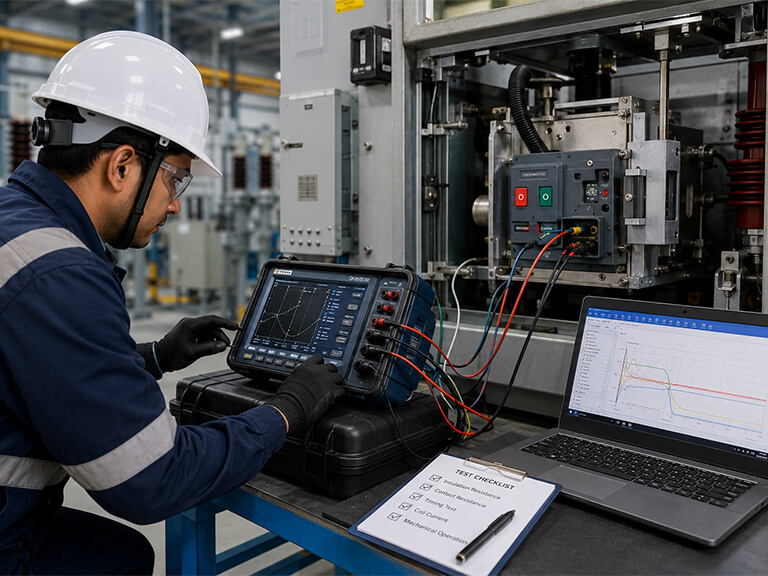
Modern electrical test instruments can consolidate multiple test functions into a more organized setup. For example, Crest’s AutoScan Circuit Breaker Test System can measure coil and motor current, contact timing, contact travel, and operating speed through an integrated system. It also supports static and dynamic contact resistance measurements with the right accessories.
If your engineers spend more time setting up tests than analyzing results, it might be time to consider a more automated solution.
2. Test Results Differ Between Operators or Shifts
A reliable test should produce consistent results under the same conditions. If outcomes change based on the engineer, shift, wiring method, or external power source, the testing process may lack consistency.
Equipment with stable power supplies and defined test sequences can create steady testing conditions. Crest’s Circuit Breaker Test System features built-in power supplies with precision-regulated outputs for coils and motors. This helps maintain repeatable test conditions while reducing the need to connect directly to live AC or DC sources.
Uniform procedures also make it easier to compare results across production lines, maintenance cycles, and different teams.
3. You Need Multiple Setups for Related Tests
Using separate setups for each measurement can increase preparation time and complicate wiring. It may also require engineers to disconnect and reconnect the equipment under test repeatedly.
Modern electrical testing devices can combine related measurements within one setup. Crest’s modular Circuit Breaker Test System can perform operational measurements and add contact resistance testing without needing to alter the existing measurement arrangement.
An integrated setup can reduce unnecessary handling while simplifying the overall testing workflow.
4. Your Current Equipment Cannot Measure All the Required Parameters
As products become more complex or quality expectations change, testing requirements may grow. An older instrument might measure one or two basic parameters but may not provide the broader performance information your engineers need.
Circuit breaker assessment may involve insulation strength, contact resistance, trip and close coil behavior, operational timing, and mechanical movement. Motor testing can include torque, speed, current, voltage, temperature, power consumption, efficiency, slip, start-up current, and insulation condition measurements.
Crest provides dedicated systems for circuit breaker OEM testing, on-field testing, traction motor testing, and induction motor testing. These include:
- Circuit Breaker Test Systems
- Circuit Breaker Operational Analysers
- Contact Resistance Meters
- Circuit Breaker Time Interval Meters
- Motor Type Test Systems
- Motor Routine Test Systems
- Motor Light Load Test Systems
- High Voltage Testers
If your team often needs extra instruments to complete one test process, a more complete solution may be necessary.
5. Testing Has Become a Production Bottleneck
When production volumes rise, slow testing can delay final inspections and shipping. Repetitive test preparation, manual readings, and report creation can keep the testing station from keeping up with the manufacturing line.
Crest Test Systems creates modern high-throughput test setups for quality assurance. Their motor testing portfolio includes type, routine, and light-load test systems, helping manufacturers choose a setup that meets their specific production and performance-testing needs.
Upgrading your equipment can help your engineers spend less time on individual test steps and more time reviewing important performance data.
6. Your Equipment Is Difficult to Use in the Field
Testing in a controlled factory and testing in a switchyard come with different challenges. Field teams need portable, reliable instruments that can handle demanding work conditions.
Crest offers portable circuit breaker test systems designed for on-field testing of circuit breakers up to 800 kV. Their on-field portfolio includes operational analysers, time interval meters, contact resistance meters, the Loco-VCB Analyzer, power supplies, transducers, and fixtures.
The MVT 200B series, for instance, is a lightweight and portable contact resistance meter for circuit breakers, isolators, disconnectors, busbars, joints, and other test objects. It can measure micro-ohm resistance by injecting current up to 200 A, even in noisy switchyard environments.
If transporting, connecting, or operating your current instruments is becoming challenging, field-ready equipment may enhance the testing experience.
7. Your Existing System Cannot Grow With Your Requirements
Testing needs constantly change. A manufacturer may introduce a new product line, add more test parameters, boost production capacity, or require a tailored test sequence.
Replacing an entire system every time requirements change can be costly and disruptive. A modular and expandable setup offers more flexibility.
Crest’s AutoScan Circuit Breaker Test System is designed to be modular and expandable, allowing additional tests to be incorporated based on specific customer and industry needs.
Crest also provides customized software and testing features for various applications, including secure test reports in user-defined formats.
If your current system cannot accommodate new tests, channels, accessories, or reporting needs, upgrading can help prepare your facility for future demands.
Choosing the Right Electrical Testing Equipment
Upgrading doesn’t just mean buying newer instruments. It means selecting equipment that fits your application, test parameters, production volume, operating environment, and reporting needs.
Before choosing new electrical test instruments, consider:
- Which products or components need testing?
- Will the equipment be used on the factory shopfloor or by an on-field maintenance team?
- Which electrical and mechanical parameters need measuring?
- Does the application require portability?
- Can the system support future test additions?
- Are installation, commissioning, calibration, spares, and technical support available?
Crest Test Systems offers on-site installation, commissioning, troubleshooting, annual maintenance support, spares, and calibration services to help maintain testing equipment throughout its service life.
Upgrade Before Testing Limitations Affect Performance
Outdated electrical testing devices may still function, but they may not provide the speed, consistency, measurement range, or flexibility needed in modern testing environments.
Recognizing these signs early can help you improve testing efficiency, standardize results, simplify field operations, and prepare your facility for changing demands. For reliable electrical testing, choose Crest Test Systems. Explore Crest’s testing and measurement solutions for circuit breakers, induction motors, and traction motors today.
FAQs:
Upgrade may be needed when testing becomes slow, inconsistent, highly manual, difficult to manage, or unable to measure required parameters.
Outdated equipment can lead to inaccurate results, longer testing times, inconsistent performance, limited measurements, and greater operational risk.
Electrical test instruments should be calibrated as recommended by the manufacturer and replaced when they can no longer meet testing, accuracy, or operational requirements.
Yes, modern electrical testing equipment can reduce manual intervention, improve testing consistency, and limit unnecessary exposure to live electrical sources.
Look for accuracy, portability, automation, multiple testing capabilities, modular design, reporting features, and reliable technical support.
Yes, upgraded equipment can simplify test setups, reduce manual steps, speed up measurements, and improve overall testing productivity.
Modern testing equipment supports repeatable procedures, accurate measurements, structured test records, and dependable quality assurance processes.
Electrical manufacturing, power transmission, railways, switchyards, motor manufacturing, maintenance, and industrial quality assurance benefit from advanced testing equipment.