


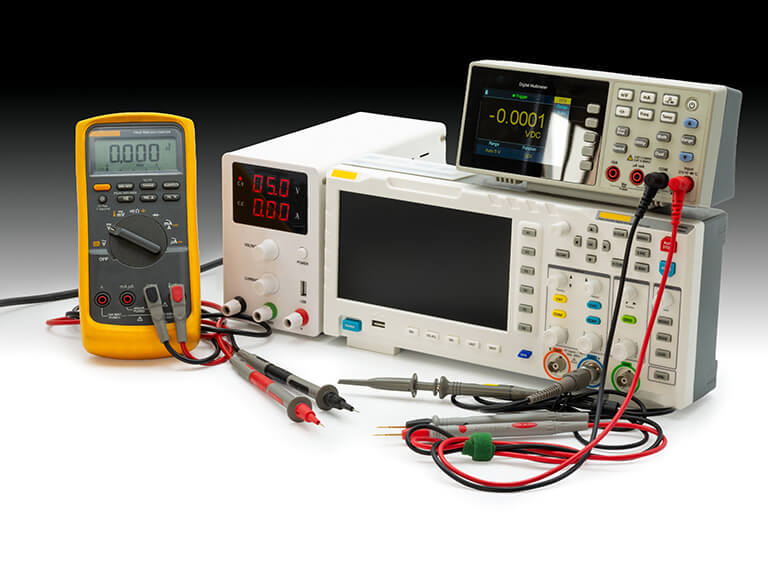
Top Factors That Impact the Accuracy of Electrical Testing Results
Electrical testing contributes to decision-making in determining product quality, predictive commissioning, troubleshooting, and safety. But a reading only makes sense if the test procedure is capable of generating accurate and repeatable results.
The accuracy of electrical testing results depends on various factors such as the instrument, test set up, ambient conditions, operating practices, and the equipment under test. Knowing these factors better enables manufacturers, maintenance, utilities, and laboratories to make fewer measurement errors and better technical judgments.
Why Accuracy of Electrical Testing Matters
Poor accuracy can result in passing bad components and failing good ones. Worse still, it can lead to the adoption of new equipment that cannot be maintained regularly and ends up overheating or short-circuiting.
Good accuracy during testing facilitates comparison with limits, previous readings, phase-to-phase values, and equipment history.
1. Choice of Test Equipment
Any instrument has a specified measurement range, accuracy class, resolution, sampling rate, and functions. The choice of equipment depends on the measured quantity and the equipment under test. Circuit breaker testing typically involves measurement of contact timing, travel, speed, coil current, motor current, contact resistance, etc. In motor testing, the parameters may include voltage, current, torque, speed, power, temperature, slip, efficiency, and insulation properties.
The selected instruments should be appropriate for the required range so that the resolution is not compromised or distorted. Furthermore, the test system should be able to provide suitable channels, fixtures, transducers, and power supplies.
2. Calibration of Test Instruments
Calibration is one of the critical factors affecting electrical testing. The accuracy of electrical test instruments degrades due to aging, frequent use, component wear, storage, and operating conditions. Having an instrument with a good display is not sufficient; instead, one should calibrate devices at specified periods and verify them before testing. One should retain calibration certificates and instrument logs to ensure traceability.
Probes, test leads, clamps, terminations, batteries, and power supplies should also be checked periodically.
3. Voltage or Current Stability
Voltage or current supplied during electrical tests should be stable to avoid inaccurate results. Stability is critical when performing measurements such as circuit breaker coil current, motor current, contact resistance, contact timing, and high-voltage testing. A stable power supply aids comparative analysis and helps identify whether the inconsistencies originate from the tested equipment or the test set.
Before taking a reading, an operator should confirm whether the test voltage, current, frequency, and timing are appropriate for the targeted equipment.
4. Test Connections and Leads
Poor test connections, oxidized ends, wrong polarity, grounds, clamps, and probe placement can reduce the electrical testing accuracy. Good connections are crucial when measuring low resistance; thus, one should use Kelvin four-terminal connections, especially when making contact resistance measurements. The connection leads should be of appropriate sizes and free from mechanical damage.
The surfaces should be cleaned and the connections tightened before taking the measurement.
5. Temperature and Environment
Conductors tend to heat up while carrying current, thus altering resistance values. Furthermore, relative humidity influences the insulation’s ability to withstand the test voltage and may influence the accuracy of the measurements. Temperature changes can also impact readings, especially when using strain gauges or torque sensors. For this reason, equipment under test should be stable to the touch before measurements.
One should also record environmental parameters such as relative humidity, vibration levels, and noise. For switchyards or worksites, the test equipment should be resistant to electromagnetic interference and adverse weather conditions.
6. Sensor and Transducer Installation
Sensors and transducers enable the measurement of mechanical movements, temperature, speed, torque, or current. Their accuracy depends on their installation, alignment, and suitability for the given application. A poorly mounted contact travel transducer can compromise the accuracy of contact travel, speed, bounce, overtravel, or rebound measurements of a circuit-breaker. Similarly, the incorrect placement of torque, speed, or temperature sensors affects motor testing results.
Fixtures should be appropriate for the equipment under test and should be mounted in accordance with the specified standards.
7. Test Procedures and Standards
The test procedures should minimize the number of variables, thus enabling accurate test result comparison. The test voltage, current, sequence, time, sampling rate, connections, load condition, and acceptance criteria should be specified. Wherever possible, standardized test procedures or test equipment that automate tests should be used. This helps eliminate human errors that might arise due to differences in switching, calculation, or data entry.
This is crucial for production acceptance, commissioning, preventive, predictive, and maintenance tests.
8. Operator Knowledge and Practices
The human factor remains one of the leading factors affecting electrical testing. One should always consider the operator’s performance when making measurements. Poor accuracy practices include incorrect channel range selection, wrong limit entry, channel connection, omission of zero check, unstable signal, and recording unstable readings. The operator should understand the equipment under test, the instrument’s capabilities, safety aspects, and how to interpret the results.
9. Test Object and Equipment Condition
The condition of the equipment under test often determines the accuracy of measurements. For example, temperature, contaminants, misalignment, stored energy, contact wear, and maintenance history contribute to measurement variations at the site or between two tests. Trend analysis is useful when comparing readings, particularly for routine or maintenance tests. It is always advisable to take measurements under the same test conditions, instrument, connections, and equipment.
10. Accuracy Recordkeeping and Reporting
A single measurement value only provides limited information. A test report should contain all relevant information concerning the test object, instruments used, settings, operator, date and time, environmental parameters, results, and acceptance criteria. Electronic records reduce transcription errors and promote comparison of results between different products, sites, or test cycles. Traceability facilitates the maintenance and analysis of test results, ensuring compliance and supporting predictive maintenance and fault diagnosis activities.
How to Improve Accuracy of Electrical Testing Results
Accuracy of electrical testing results is achieved through good test practices that consider all aspects of a measurement. This includes using suitable instruments, calibrated channels, stable voltage and current, test connections, properly installed sensors, standardized procedures, trained personnel, and recordkeeping.
Crest Test Systems provides a wide range of test equipment for OEM and field circuit breaker testing. The company also offers traction and induction motor testing equipment. Its products include circuit breaker test systems, circuit breaker operational analysers, contact resistance meters, high-voltage testers, power supplies, transducers, fixtures, and automated motor test systems. By addressing all factors affecting electrical testing, one can achieve repeatable results, detect developing faults, improve quality control, and implement appropriate maintenance and acceptance procedures.
FAQs:
Instrument accuracy, calibration, test connections, environmental conditions, operator practices, and equipment condition can all affect results.
Calibration verifies instrument accuracy, supports measurement traceability, and helps identify measurement drift before testing.
Temperature, humidity, vibration, and electromagnetic interference can alter equipment behaviour and introduce measurement errors.
Common causes include incorrect equipment selection, poor connections, unstable power, improper settings, uncalibrated instruments, and operator error.
Calibration frequency should be based on manufacturer guidance, usage, accuracy requirements, regulations, and previous calibration performance.
Yes, incorrect connections, range selection, test procedures, or result interpretation can significantly reduce electrical testing accuracy.
ISO/IEC 17025, IEC 61557, IEEE 120, and application-specific IEC or IEEE standards support consistent and reliable electrical testing.
Businesses can improve reliability through calibrated instruments, standard procedures, trained operators, controlled test conditions, and traceable reporting.